Rituals & Traditions
Why Pind Daan in Prayagraj is Essential for Ancestral Peace
05 Sep 2026 · Sangam Pitra Mukti
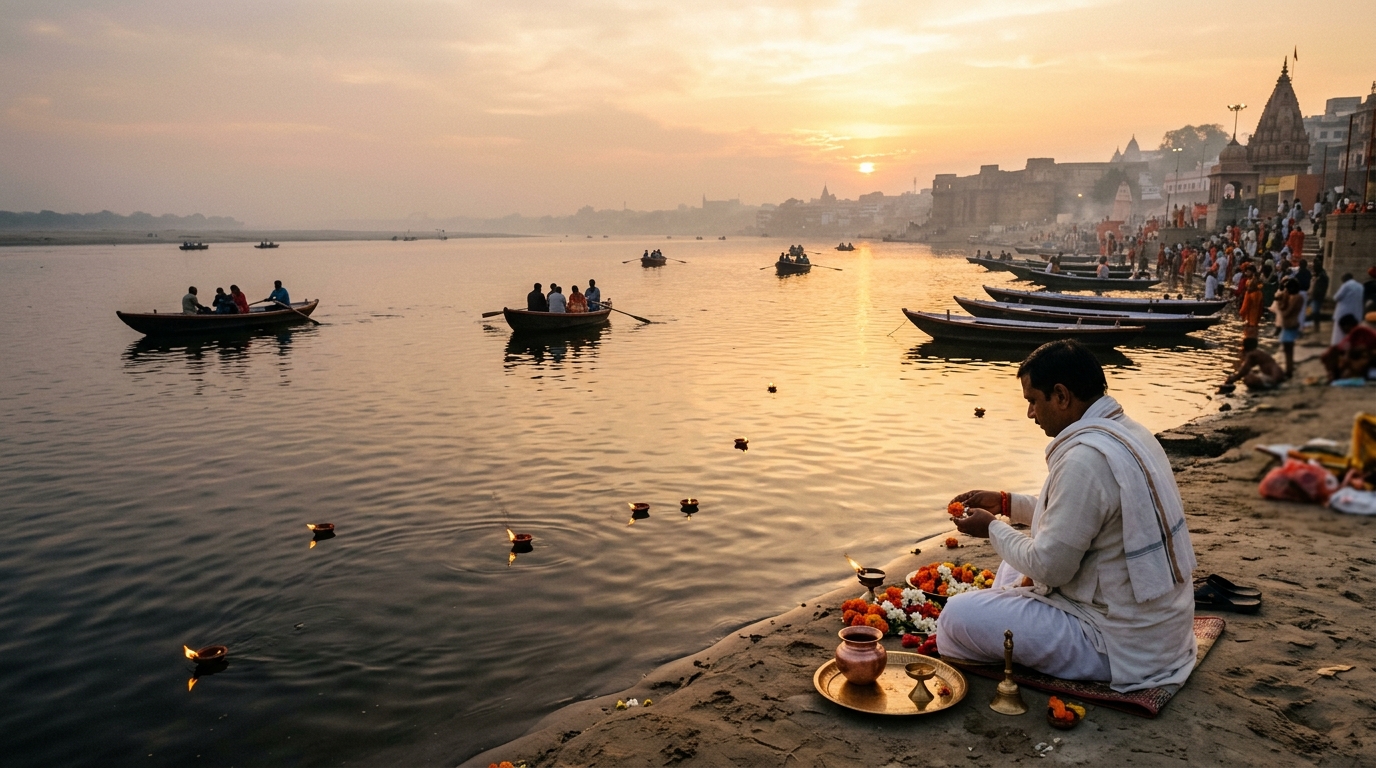
In Hindu culture, our duties towards our parents and ancestors do not end with their passing. Pind Daan is the ultimate expression of gratitude and reverence—a ritual designed to provide spiritual nourishment to forefathers residing in Pitru Loka.
The word 'Pind' refers to a rounded offering made of cooked rice, barley flour, black sesame seeds, oats, and honey. When offered by a direct descendant, this symbolic food satisfies the hunger of the ancestors and helps them progress toward heavenly abodes.
Performing Pind Daan at Triveni Sangam in Prayagraj is highly auspicious. The confluence of the Ganga, Yamuna, and Saraswati creates a powerful energy vortex. It is believed that offerings made here reach the ancestors instantly. Lord Rama himself is said to have visited Prayagraj to perform Pind Daan for his father, King Dasharatha.
The procedure requires an expert Tirth Purohit. The ritual starts with a Sankalp at the river bank. The family must know the Gotra and the names of up to seven generations of forefathers. The Pandit guides the Tarpan (water offering) and the preparation of the Pinds. After rigorous Gotra Uccharan and Vedic chanting, the Pinds are respectfully offered to the holy river.
Ignoring this duty can lead to 'Pitra Dosh'—an ancestral curse that manifests as financial blockages, continuous family disputes, and health issues in the lives of the descendants. By performing Pind Daan, especially during Pitru Paksha or on Amavasya, families can eradicate Pitra Dosh, inviting overall prosperity and peace into their homes.
Arrange your Pitra Seva at Triveni Sangam, Prayagraj
Ready to book Pind Daan, Tarpan, Asthi Visarjan, or another sacred service? Our coordinators are here to help.